On April 26, 2022, the International Culture Federation (ICF) held its third salon event at Gallery M2 in Improve Canada. The theme of this session was “Mysticism.” The event was hosted by Ms. Maggie Yu, and co-sponsored by CYCA and ACPN.
Ms. Yu shared with the audience that mysticism encompasses various doctrines and religious rituals that enable people to attain higher levels of spiritual or mental power. In ancient times, practices such as divination and sacrifice not only served as a spiritual refuge but also functioned as a unifying force that drove collective action. She pointed out that even the lyrics of Canada’s and China’s national anthems reflect the power of unity and contain traces of mysticism. She also emphasized that an artist’s creative inspiration often involves mystical elements, though mysticism is sometimes over-interpreted by audiences or readers. To truly understand the application and influence of mysticism in real life, one must consider multiple dimensions—history, religion, culture, geography, local records, contemporaneous figures, the surrounding natural environment, as well as the social, political, economic, technological, and humanistic contexts. Ms. Yu also noted that mysticism can, at times, lead individuals into impractical lifestyles or fragmented thinking.
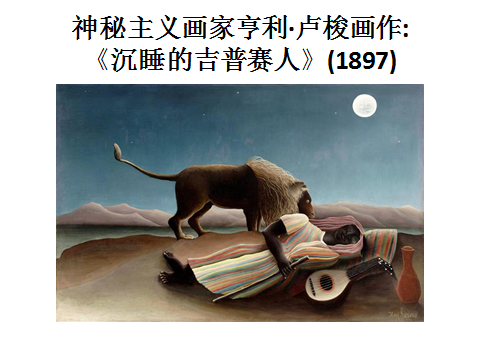
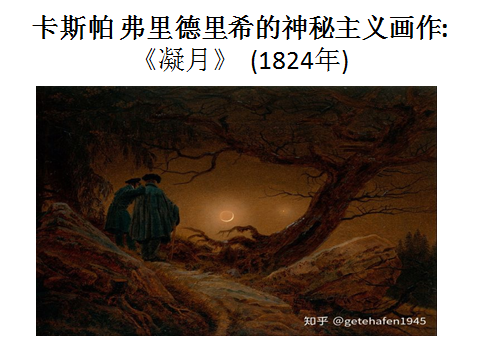
Participants at the event engaged in a lively discussion. Drawing on Chinese philosophical traditions and artistic spirit, they explored the evolution of mysticism in contemporary literature as both an epistemological approach and an aesthetic perspective. They observed that the setbacks and revival of mysticism in contemporary literature are an inevitable result of historical development. As literature increasingly returns to and deepens its relationship with the realm of art, writers are able to create distance and embrace aesthetics, moving beyond a purely realistic or sociological engagement with their times, and instead striving to build a self-sufficient aesthetic world. This holistic symbolic style naturally gives rise to a mystical quality in literature. Participants also exchanged views on mysticism’s influence in the visual arts, analyzing the mystical works of French painter Henri Rousseau and German painter Caspar David Friedrich. Through their analyses, they offered new interpretations of the breakthroughs in these painters’ styles, especially the hidden and profound mysteries within their works, uncovering the latent significance of mysticism that imbues their art.
This event was jointly organized by the ICF executive team together with the Federation’s Artists Club and Daoist Philosophy Club.